

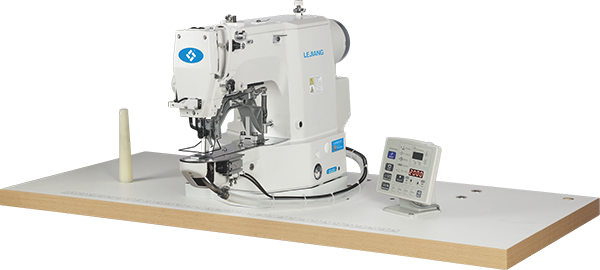
The main function of a button hole machine is to form a reinforced opening that allows a button to pass through while helping prevent fabric fraying and deformation. Compared with manual sewing or ordinary sewing machines, a dedicated button hole machine offers better accuracy, faster speed, and more consistent results. These advantages are especially important in mass production, where every garment needs to meet the same quality standard.
A button hole machine usually works by sewing a dense stitch pattern around a marked area. Depending on the machine type, it may stitch first and cut later, or complete sewing and cutting in one coordinated cycle. Stable stitch density, balanced thread tension, and accurate shape help create buttonholes with neat edges and professional finishing.
Different garments require different buttonhole styles. Straight buttonholes are common for shirts, blouses, and uniforms. Eyelet buttonholes are often used for jackets, coats, and denim products that need stronger reinforcement. Because fabric type, garment style, and sewing requirements vary, manufacturers usually select button hole machines based on actual production needs.
One major advantage of a button hole machine is efficiency. Manual buttonhole sewing is slow and difficult to standardize. Industrial machines can complete the same operation quickly and repeatedly with less variation. This helps reduce labor dependence, shorten production time, and improve output stability.
Appearance quality is another important benefit. A clean and well-shaped buttonhole gives the garment a more professional look. Uneven stitching, loose thread ends, or poor cutting can lower the value of the finished product. With a reliable button hole machine, factories can maintain better visual consistency across large orders.
Durability also matters. Buttonholes are frequently pulled during daily wear and washing. If stitching is weak, the opening may tear or lose shape over time. Industrial button hole machines provide better reinforcement, helping garments stay functional for longer.
Modern button hole machines may include automatic thread trimming, programmable patterns, digital control panels, and positioning systems. These features improve ease of operation and reduce human error. Many advanced models can also handle different materials, from lightweight fabrics to medium and heavy textiles.
In summary, a button hole machine is an essential part of modern garment production. It improves efficiency, appearance, and durability while helping manufacturers achieve more stable sewing quality.