

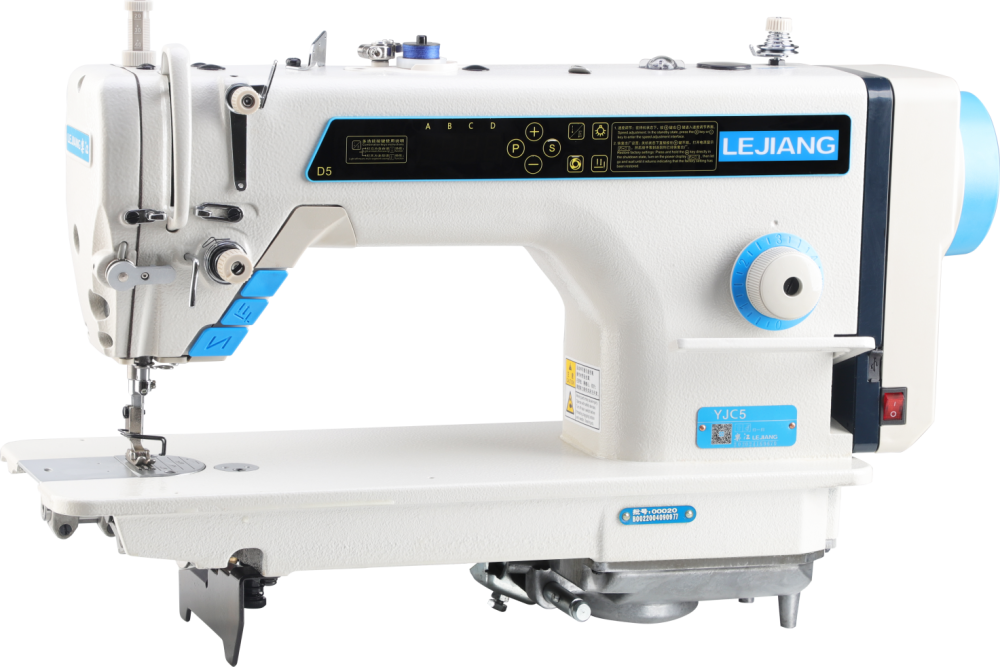
One of the biggest advantages of a lockstitch sewing machine is stitch quality. It produces seams that are clean, balanced, and professional in appearance on both sides of the material. This makes it a popular choice for products where seam appearance and durability both matter.
Another reason for its wide use is versatility. Depending on the machine model and setup, it can sew cotton, polyester, denim, canvas, synthetic materials, and certain types of leather. Manufacturers can choose different models based on sewing speed, stitch length, material thickness, and production needs.
Modern lockstitch sewing machines also help improve factory efficiency. Many machines now include features such as automatic thread trimming, needle positioning, programmable backtacking, and energy-saving servo motors. These functions reduce manual work, improve consistency, and support stable long-hour production.
The machine is also easy to integrate into standard production lines. Operators can learn it quickly, replacement parts are widely available, and maintenance is relatively straightforward. This makes it a practical and dependable solution for many factories.
In summary, the lockstitch sewing machine remains essential in industrial sewing because it combines strong seam formation, neat stitch appearance, broad material compatibility, and efficient production performance. It continues to be a core machine in modern garment and industrial manufacturing.