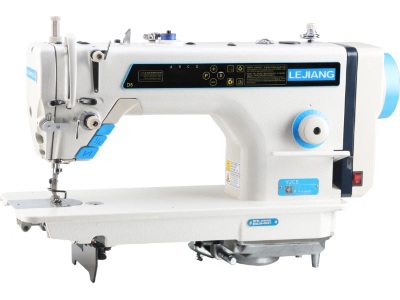
Feed timing calibration should be aligned with the motion trajectory of the feed dogs. When the needle begins to rise, the feed dogs should simultaneously advance by 0.8–1.2 mm to optimize stitch uniformity. Rotary hook positioning should be adjusted using a three-point alignment method to set the hook angle, ensuring that the clearance between the hook tip and the needle is controlled within 0.05 mm, significantly reducing the likelihood of thread breakage.
Presser foot pressure must be adjusted in stages according to fabric thickness. For lightweight fabrics, a pressure range of 20–30 N is recommended, while heavier materials require increased pressure of 50–70 N to ensure stable fabric feeding. Stitch length fine-tuning can be performed via the stitch length dial in coordination with feed dog height adjustments. When sewing elastic fabrics, the stitch length should be reduced to 1.5–2 mm to enhance stitch stability.
It is especially important to note that professional feeler gauges and dial indicators should be used for quantitative calibration during adjustment, avoiding parameter deviations caused by experience-based adjustments alone.