

An overlock sewing machine works by trimming the fabric edge and wrapping thread around it in one continuous sewing process. This creates a neat, secure, and flexible seam that is widely used in garment and textile production.
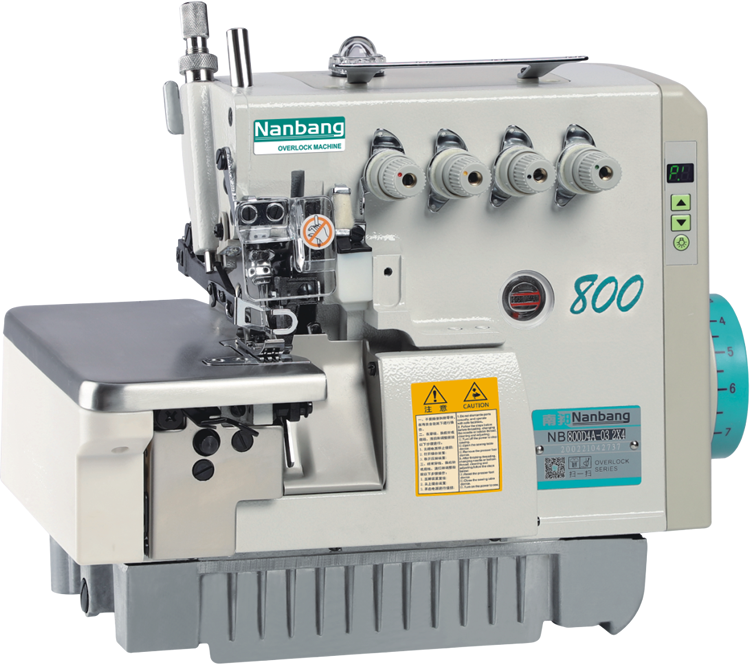
The process begins when the fabric is fed under the presser foot. As the material moves forward, the machine’s knife trims the edge to create a clean and even cutting line. Right after trimming, the needles and loopers form stitches around the edge, finishing the fabric before it can fray.
Unlike a lockstitch machine, an overlock machine does not use a bobbin. Instead, it uses upper and lower loopers together with one or two needles. These components move in coordination to create a multi-thread stitch structure around the fabric edge. This stitch is strong, clean, and more elastic than many conventional seam types.
One of the most important parts of the machine is the knife system. The knife cuts away excess fabric before the stitch is formed, which helps keep the seam neat and consistent. This is one reason overlock sewing is widely used for professional edge finishing.
Another important feature is differential feed. This system controls how the fabric moves during sewing. It is especially useful for knit, stretch, or lightweight materials that may pucker, stretch, or wave easily. By adjusting the feed ratio, operators can produce smoother and more stable seams.
Thread tension is also essential. Each thread must be balanced correctly to achieve a clean stitch. If the tension is not properly adjusted, the seam may become loose, tight, uneven, or weak. Correct settings depend on fabric type, thread type, and seam purpose.
Overlock sewing machines are commonly used for side seams, shoulder seams, sleeve assembly, edge finishing, and seam reinforcement. A 3-thread machine is usually used for simple overedge finishing, while 4-thread and 5-thread machines are more suitable for seam joining and stronger garment construction.
Modern overlock sewing machines may also include direct-drive motors, automatic lubrication, servo systems, and automatic thread trimming. These features improve production efficiency, reduce maintenance, and support stable high-speed sewing.
Overall, an overlock sewing machine works by combining trimming, feeding, and multi-thread stitch formation into one fast and efficient process. That is why it is such an important machine in modern industrial sewing.