

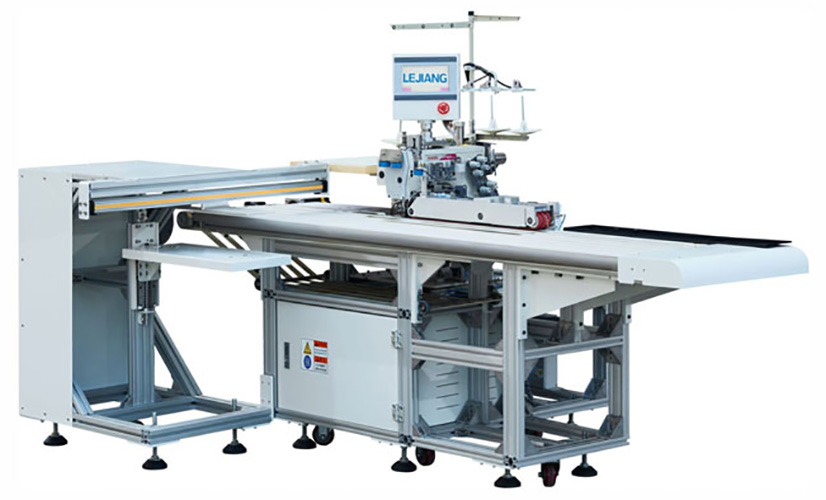
The first thing to consider is the type of product being made. Different denim garments require different operations. A factory producing basic jeans in large volume may focus on machines for hemming, pocket attaching, bartacking, waistband sewing, and belt loop fixing. A factory making fashion denim or jackets may need more flexibility for decorative stitching and style variation. Understanding your product structure is the first step in choosing the right equipment.
Fabric characteristics are also important. Denim can vary in weight, softness, stretch level, and layer thickness. Some products use rigid heavyweight denim, while others use lighter stretch denim or blended fabrics. Machines should match the materials used in production. Good feeding control, suitable presser foot pressure, stable stitch formation, and strong needle penetration are all important when processing different types of denim.
Production volume should also influence equipment selection. Smaller factories with lower output and frequent style changes may prefer versatile heavy-duty machines. Larger factories with repeat orders and standardized processes often benefit more from dedicated denim equipment. If a sewing operation is repeated many times every day, specialized machinery can often improve both speed and consistency.
Seam quality requirements are another key factor. In denim garments, appearance and durability are closely connected. Buyers often expect clean topstitching, balanced seams, accurate reinforcement, and strong performance after washing and daily use. For factories serving international markets or established brands, these standards may be even higher. In such cases, equipment with better repeatability and more stable control becomes especially important.
Automation level should be evaluated carefully. Some factories prefer simple machines that are easy to maintain, while others benefit from advanced models with automatic trimming, programmable patterns, digital settings, and electronic control systems. The best choice depends on your operator skill level, maintenance resources, order type, and long-term production plan.
Durability and after-sales support should never be ignored. Denim production places heavy mechanical load on equipment, so machine stability matters. Factories should consider build quality, spare parts availability, service support, and maintenance convenience before making a purchase. A cheaper machine may not be the better investment if reliability is poor.
It is also important to think about workflow compatibility. A machine may work well on its own, but if it does not fit smoothly into the existing line, the total production benefit may be limited. The best equipment should support a balanced and efficient process from one operation to the next.
In conclusion, choosing the right denim special equipment requires a clear understanding of your products, materials, production volume, quality requirements, and factory workflow. The best machine is the one that helps your factory produce denim garments more efficiently, more consistently, and with greater long-term value.