

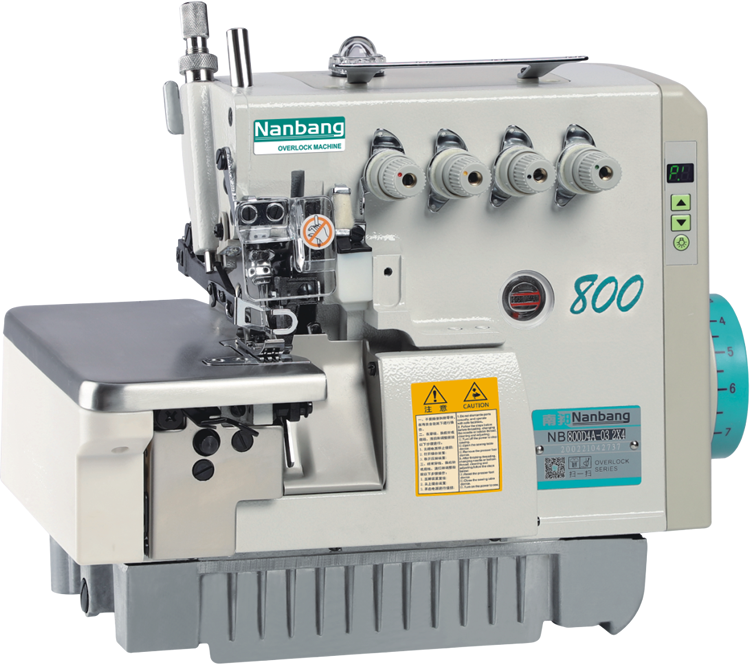
For ribbed fabrics of varying thicknesses, the differential feed ratio should be adjusted accordingly within the range of 0.7–1.2. Use a lower setting for lightweight fabrics to avoid excessive stretching, while increasing the ratio slightly for thicker materials to maintain smooth and even stitches. During sewing, a 75/11 ballpoint needle should be used in combination with nylon core-spun thread to reduce the risk of thread breakage. At the same time, adjust the upper and lower looper thread tension to the range of 2.5–3.0 N to balance stitch elasticity.
For ribbed fabrics that tend to curl at the edges, a hemming presser foot can be engaged as an auxiliary aid. Gently guiding the neckline edge with your fingers during sewing will help the finished neckline maintain a natural curve. Finally, when securing the seam, leave a 3 cm thread tail and perform two reinforcing stitches to prevent the seam from unraveling during wear.